I hope you find this article insightful. If you’re looking for expert guidance on property investments in Dubai, feel free to reach out.
Author: Fahad Al Kuwari | Dubai Real Estate Consultant
Click here to get in touch with me directly.
How to tell if a Dubai property is a good deal: a straight‑talk guide to cut through OP claims and sales hype, recognize real value, and decide with confidence. Whether you’re investing or buying a home, in minutes, you’ll know when to proceed, negotiate, or walk away.
TL;DR – How to tell if a Dubai Property is a Good Deal (Quick Answer)
Good deal is a Dubai property bought at or below today’s like‑for‑like market price (not “OP”), whose money maths work (solid net yield and, if mortgaged, healthy coverage), whose layout/view/condition buyers want, with clear liquidity for resale, and it fits your goal (income, growth, or home).
This is how to tell if a Dubai property is a good deal at a glance: price vs comps, money maths, quality, liquidity, and fit.
The 5 Checks (Quick Test)
Green / Amber / Red
- TL;DR – How to tell if a Dubai Property is a Good Deal (Quick Answer)
- What a "Good Deal" Means – and How to Tell if a Dubai property is a Good Deal
- 10‑Minute Test – How to Tell if a Dubai Property is a Good Deal
- Common Myths That Ruin Decisions
- Dubai Rules for Telling if a Property is a Good Deal
- Quick Money Guides (Keep It Simple)
- Red Flags That Turn "Cheap" Into "Costly"
- FAQs (Quick Answers for Buyers)
- Conclusion – Buy Right, With Confidence
What a “Good Deal” Means – and How to Tell if a Dubai property is a Good Deal
Plain‑English Definition
Good deal is a home or investment you buy at or below today’s like‑for‑like market value (not the seller’s OP), where the money maths work, the asset is desirable (layout/light/view/condition), you can resell without a fire‑sale, and it serves your goal (income, growth, or lifestyle) over the next 3-7 years.
This definition is the backbone of how to tell if a Dubai property is a good deal.
Investor vs End‑User: How “Good” Differs
Investors (Buy‑to‑Let): Outcome = Income + Exit:
End‑users (Owner‑Occupiers): outcome = Livability + Resale Insurance:
If you’re building a portfolio or comparing strategies and expected returns by area, dive into our Dubai real estate investment guide.
Same building, different verdicts: a unit can be a great investment but a poor home (or vice versa). Judge against your outcome.
Why “Distress” and “Cheap” Are Not The Same as “Good”
Rule of thumb: Only call it a good deal when entry price, money maths, asset desirability, exitability, and goal fit all line up. If one leg is missing, renegotiate or walk.

10‑Minute Test – How to Tell if a Dubai Property is a Good Deal
Decide if a Dubai property is a good deal using five fast checks: price vs comps, net yield/TCO, coverage, quality, and exitability.
Use this 10‑minute method to tell if a Dubai property is a good deal before you invest time or emotion.
Total Time Needed :
10
Minutes
Total Cost:
0
AED
Required Tools:
Things Needed?
STEPS:
What to do (3-5 minutes):
1. Pull 3-6 recent sales from the same building/stack/view (or closest match).
2. Normalize for floor, view, layout/condition, and age/finish.
3. Use net/usable area for all PSF calculations (don’t mix net and gross).
4. Place your unit against a Low-Median-High comp band.
Pass/Amber/Fail:
Pass (Green): Subject ≤ median net‑PSF once normalized.
Amber: Within ~0-10% above median. Needs terms/price justification.
Fail (Red): >10% above median without a unique, provable feature.
Tip: “Below OP” is not a comp. Decide on today’s like‑for‑like sales.
Formulas (keep it simple):
Net yield = (Annual rent – service charges – management – vacancy – maintenance – insurance/other) ÷ price.
Coverage (DSCR) = (Monthly rent – monthly OpEx) ÷ EMI.
Pass/Amber/Fail:
Pass (Green): Net yield sensible for the area and coverage ≥ ~1.25×.
Amber: Coverage 1.05–1.24× or yield borderline → fix with price/terms.
Fail (Red): Coverage < ~1.05× or yield only works on optimistic rents.
1‑minute stress test: Re‑run with +1 month vacancy and +150-250 bps rate. If it breaks, you need a lower price or better terms.
TCO = EMI + service charges + utilities + routine upkeep + parking/commute/time.
Pass: TCO fits your monthly budget with a buffer you’re comfortable with for the next 3-5 years.
Run a quick desirability scan:
Layout and Efficiency: No “dead corridors”. Sensible room sizes; storage.
Light and Orientation: Natural light; privacy. No harsh west heat if that matters to you.
View/Outlook: Park/sea/skyline holds value. Avoid service yards/blank walls unless priced in.
Condition/MEP: HVAC, windows, water ingress, noise.
Service Charges vs Spec: High fees only make sense when amenities/management are truly superior.
Pass: You’d happily re‑buy the same unit in five years.
Check the market depth:
Days on Market (DOM): How long do similar units actually take to sell/let?
Transaction volume: Are there regular like‑for‑like sales?
Listing density: Are you competing with many near‑identical units?
Pass/Amber/Fail:
Pass (Green): Consistent transactions. DOM in a normal band. No fire‑sale history.
Amber: Slower DOM but active market. Price needs a margin of safety.
Fail (Red): Thin/erratic comps. Units routinely need deep discounts to move.
Investor: Is this primarily income (yield/coverage) or growth (clear exit/IRR)? Pick one main objective.
End‑user: Does the home simplify your life (layout, commute, schools, noise) without stretching TCO?
Pass: The property clearly advances your chosen objective.
Fail: It asks you to compromise on what matters most.
Quick Decision Grid (Circle One)
| Check | Green | Amber | Red |
|---|---|---|---|
| Price vs today’s comps (net‑PSF) | ○ | ○ | ○ |
| Money maths (net yield & coverage) | ○ | ○ | ○ |
| Property quality (layout/light/view/condition) | ○ | ○ | ○ |
| Exitability (DOM & transactions) | ○ | ○ | ○ |
| Fit to your goal (income/growth/lifestyle) | ○ | ○ | ○ |
Verdict:
If You’re “Amber”: Fast Ways to Turn It Green
Show your math: “Price -3% lifts coverage from 1.12× → 1.26×. Net yield +0.4 pp. Decision → Proceed.”
Your 6 Numbers to Save (for any property)
- PSF vs median (net) ……… ±%
- Net yield ……… %
- Coverage/DSCR ……… × (base / downside)
- Service charges ……… AED/sq.ft (billing basis?)
- DOM ……… days (unit type/stack)
- Verdict ……… Proceed / Conditions / Pass
Remember: Good deal is price + math + desirability + exit + fit. If one leg is missing, it isn’t a stool, it’s a balancing act.
Timing can strengthen negotiations, if you’re optimizing seasonality and market rhythm, see the best time to buy in Dubai guide.

Common Myths That Ruin Decisions
These myths confuse buyers learning how to tell if a Dubai property is a good deal.
Myth 1: “Below OP” Automatically Means Bargain
Why it’s wrong: OP = what the first buyer paid the developer, sometimes during hype cycles or with premiums that no longer hold. It’s not today’s value.
What to do instead:
1‑minute check: Plot the unit against a Low–Median–High band of recent sales. Aim ≤ median.
Myth 2: “Highest Yield Wins”
Why it’s wrong: Very high yields often hide risk: poor liquidity, elevated service charges, weak tenant demand, or condition/capex traps. Paper returns vanish if you need a fire‑sale to exit.
What to do instead:
1‑minute check: Re‑run yield after adding 1 month vacancy and +10-15% service‑charge drift.
Myth 3: “Cheapest Unit is Best”
Why it’s wrong: The cheapest stack/floor is often cheap because of layout inefficiency, noisy/outlook issues, or aging systems, all of which suppress rent and resale.
What to do instead:
1‑minute check: Would you (or most buyers) re‑buy this exact unit in five years? If not, it isn’t value.
Myth 4: “Distress” Means Value
Why it’s wrong: “Distress” describes the seller’s urgency, not the asset’s quality. Distressed sale can still be a bad property (legal snags, building issues, illiquidity).
What to do instead:
1‑minute check: If the unit fails comps or coverage, the “discount” is just noise, walk or reprice hard.
Bonus Pitfalls (Quick Hits)
Takeaway: Good deal survives the math, the micro (unit quality), the market (liquidity), and your goal, all at once.

Dubai Rules for Telling if a Property is a Good Deal
In Dubai, OP, OA fees, and off‑plan rules change how to tell if a Dubai property is a good deal.
OP vs Market Value (How to Sanity‑Check “Below OP”)
1‑minute check: If it’s below OP but above today’s comps, it’s not a deal, renegotiate or walk.
If you’re weighing developer stock versus resale, read our guide to off‑plan vs ready in Dubai , escrow, assignment rules, handover timing, and how to compare to handover‑time comps.
Service Charges / OA Fees (Where Net Yield Goes to Die)
1‑minute check: If two similar units have different fees, the “cheaper” price may be costlier to hold.
Off‑plan vs Ready (What to Verify Before Comparing)
Off‑plan (Developer/Assignment):
Ready (Completed):
1‑minute check: If your plan needs flexibility to sell early, an SPA that restricts assignment = red flag.
Fees and Process Snapshot (Include These in Your Math)
1‑minute check: Add all buy/sell costs to your spreadsheet so your IRR or net yield isn’t flattered by missing line items.
For paperwork, fees, and the exact transfer timeline, follow our step‑by‑step buying process in Dubai.
Takeaway: In Dubai, OP is just history, service charges decide net reality, off‑plan needs contract discipline, and fees belong in the math. Keep these four rules tight and you’ll avoid 80% of “looks good on paper” traps.
Quick Money Guides (Keep It Simple)
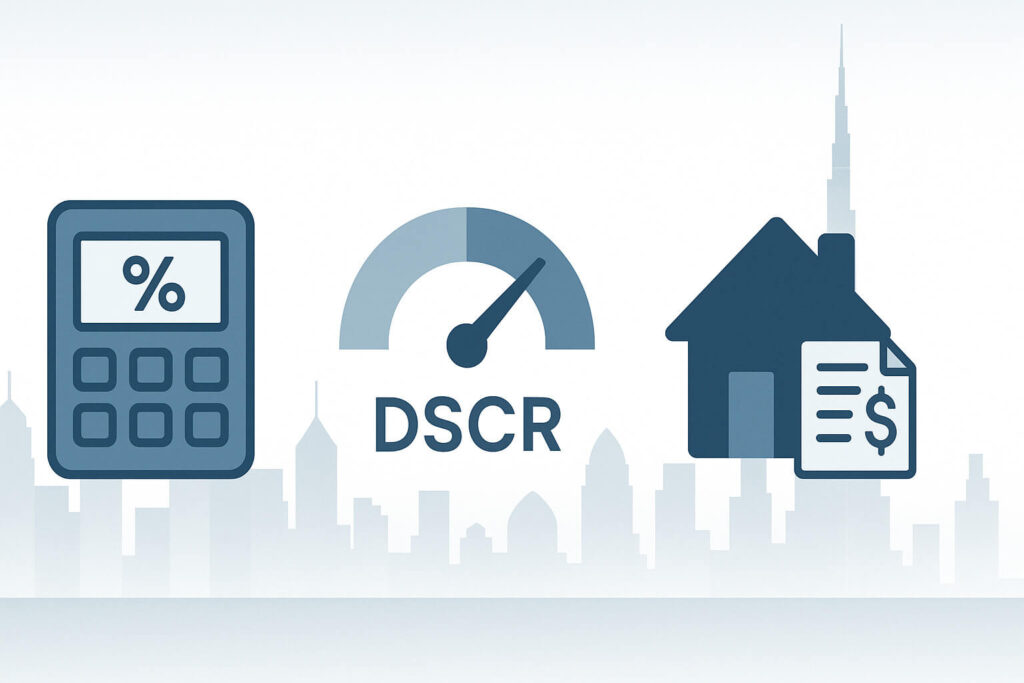
Net yield, DSCR, and TCO are the quickest numbers to tell if a Dubai property is a good deal.
Net Yield vs Cap Rate – What’s The Difference and When to Use Which?
Plain definition:
When to use:
What to include in “recurring costs” (Dubai):
Pitfalls:
Coverage / DSCR – The One‑Line Comfort Test (For Mortgages)
Definition:
Comfort bands (rules of thumb):
Fast fixes if thin:
Stress test (do this before emotions get involved):
TCO (Total Cost of Occupancy) – for End‑Users
Definition:
TCO = EMI + service charges + utilities + routine upkeep + parking/commute/time (and any community/permit costs).
How to use it:
Hidden costs to surface early:
1‑minute “can we live here comfortably?”
Keep These Three on a Sticky Note
- Net yield tells you reality, not brochure.
- Coverage/DSCR tells you sleep‑at‑night comfort.
- TCO tells end‑users if the home is financially livable beyond the sticker price.
Up next: Red Flags That Turn “Cheap” Into “Costly”, the quick scan that saves you from beautiful but broken deals.

Red Flags That Turn “Cheap” Into “Costly”
Use this like a pre‑flight safety check. If any hard red shows up and can’t be fixed or priced in, walk. If you want to tell if a Dubai property is a good deal, scan for these red flags first.
1. Title and Legal Complications (Hard Red)
What it looks like: Unclear ownership, liens/encumbrances, OA/service‑charge arrears, court attachments, missing completion/occupancy docs.
Why it matters: You may not be able to transfer or resell cleanly.
Quick check: Ask for title deed, OA clearance, developer NOC requirements, and (if mortgaged seller) liability letter.
Fix or walk: Only proceed if issues are cured before transfer (or funds held in escrow/holdback). Otherwise, walk.
2. Structural / MEP Problems (Hard Red if scope unknown)
What it looks like: Water ingress, façade/elevator failures, HVAC/MEP breakdowns, fire‑safety issues, recurring building defects.
Why it matters: Uninsurable costs, persistent vacancies, resale stigma.
Quick check: Independent snag/inspection + building maintenance history.
Fix or walk: If scope is quantified and priced into a discount or holdback, maybe. If uncertain, walk.
3. Owners’ Association (OA) and Service‑Charge Risk
What it looks like: Under‑funded sinking fund, rising arrears, fee spikes, opaque budgets, unusually high AED/sq.ft vs peers.
Why it matters: Net yield erodes. Buyers avoid the building.
Quick check: 2-3 years of OA statements. Confirm billing area (net/gross, balcony).
Fix or walk: Price in higher OpEx and demand transparency. If OA is dysfunctional with big works due, walk or reprice hard.
4. Liquidity Cliff (Thin Buyer/Tenant Pool)
What it looks like: Similar units sit for months or sell only with heavy discounts. Very few like‑for‑like transactions. High listing saturation.
Why it matters: Hard to exit. You pay via price cuts or long holding times.
Quick check: Days on Market and recent closed sales for the same stack/unit type.
Fix or walk: Enter at a deep discount or pick a more liquid stack/building.
5. Off‑Plan Assignment / Handover Risks
What it looks like: SPA blocks resale until a high % is paid. Vague handover timelines. Weak defect‑liability terms. Escrow ambiguity.
Why it matters: IRR depends on timing and exitability. You can get stuck.
Quick check: Read the SPA: assignment clause, milestones, penalties, escrow details.
Fix or walk: Only proceed if assignment fits your timeline and handover is credible. Otherwise choose different terms or a ready unit.
6. Tenancy Complications
What it looks like: Unregistered Ejari, arrears, unusual lease clauses, promised “vacant on transfer” without valid notice timelines.
Why it matters: Income and exit rely on enforceable tenancy status.
Quick check: Ejari/lease copy, deposit receipt, arrears statement; confirm notice requirements for vacant possession.
Fix or walk: Price for risk or require contractual remedies. If unclear, walk.
7. Layout / Outlook Deal‑Breakers
What it looks like: Inefficient floor plan (dead corridors, odd rooms), poor light, privacy issues, negative or blocked views (service yards, blank walls).
Why it matters: Lower rentability and resale; buyers select away even at discounts.
Quick check: Walk‑through + floor plan. Ask “Would most buyers want this?”
Fix or walk: Only if price truly compensates. Otherwise pick a better stack/floor.
8. Hidden Cost Traps
What it looks like: Chiller not included, parking fees, frequent special assessments, aging appliances/MEP, high management fees.
Why it matters: Paper yield becomes real cash drag.
Quick check: OA inclusions, last capex works, typical maintenance bills, PM contract.
Fix or walk: Adjust net yield and coverage. If still thin, reprice or pass.
9. Developer / Management Reputation
What it looks like: Chronic delivery delays, unresolved snags, poor after‑sales, weak building management SLAs.
Why it matters: More downtime, higher OpEx, reputational discount on resale.
Quick check: Prior project track record. Resident feedback. Service response times.
Fix or walk: Value only with a clear discount and strong contractual protections.
10. Numbers That Only Work on Optimism
What it looks like: Using asking (not achieved) rents, ignoring vacancy, excluding service charges, optimistic exit prices.
Why it matters: Models pass on paper, fail in life.
Quick check: Recompute net yield with achieved rents, 1 month vacancy, full OpEx. Run downside DSCR (+150-250 bps rate. -10-15% exit).
Fix or walk: If it breaks and you can’t fix with price/terms, walk.
Hard Reds vs Priceable Ambers
Hard Reds (veto unless cured):
Priceable Ambers (possible with terms/discount):
Bottom line: Red flags aren’t a dare to “negotiate harder.” They’re a signal to protect capital. Cure them, price them properly, or pass.

FAQs (Quick Answers for Buyers)

Conclusion – Buy Right, With Confidence
A good deal isn’t the lowest sticker price or a “distress” tag. It’s the one where today’s entry price is fair, the money maths hold up (net yield/coverage or livable TCO), the unit is genuinely desirable (layout, light, view, condition), you can exit without a fire‑sale, and it serves your goal for the next 3-7 years.
If one leg is missing, renegotiate-or walk. The framework above shows exactly how to tell the difference.
Book a Consultation – Get Expert Eyes on Your Shortlist
Who it’s for: Buyers who want a clear, independent view before committing-whether you’re investing for income/growth or purchasing a home to live in.
If you still want clarity on how to tell if a Dubai property is a good deal, book a consultation and get a one‑page verdict.
Note: This consultation is advisory. It’s not financial, tax, or legal advice. Where relevant we recommend independent valuation and technical inspection.
Want an independent verdict before you commit? Book a consultation and get a one‑page decision: Proceed, Conditions, or Pass.
Share

Fahad Al Kuwari
Buyer Consultant Dubai Real EstateWith a deep commitment to providing personalized service, I specialize in helping buyers find the perfect property in Dubai. Whether you are looking for a luxurious waterfront villa, a modern penthouse, or a high-yield investment property, I’m here to make the process seamless and enjoyable.